Alberta Employment Standards Code: Employer Obligations
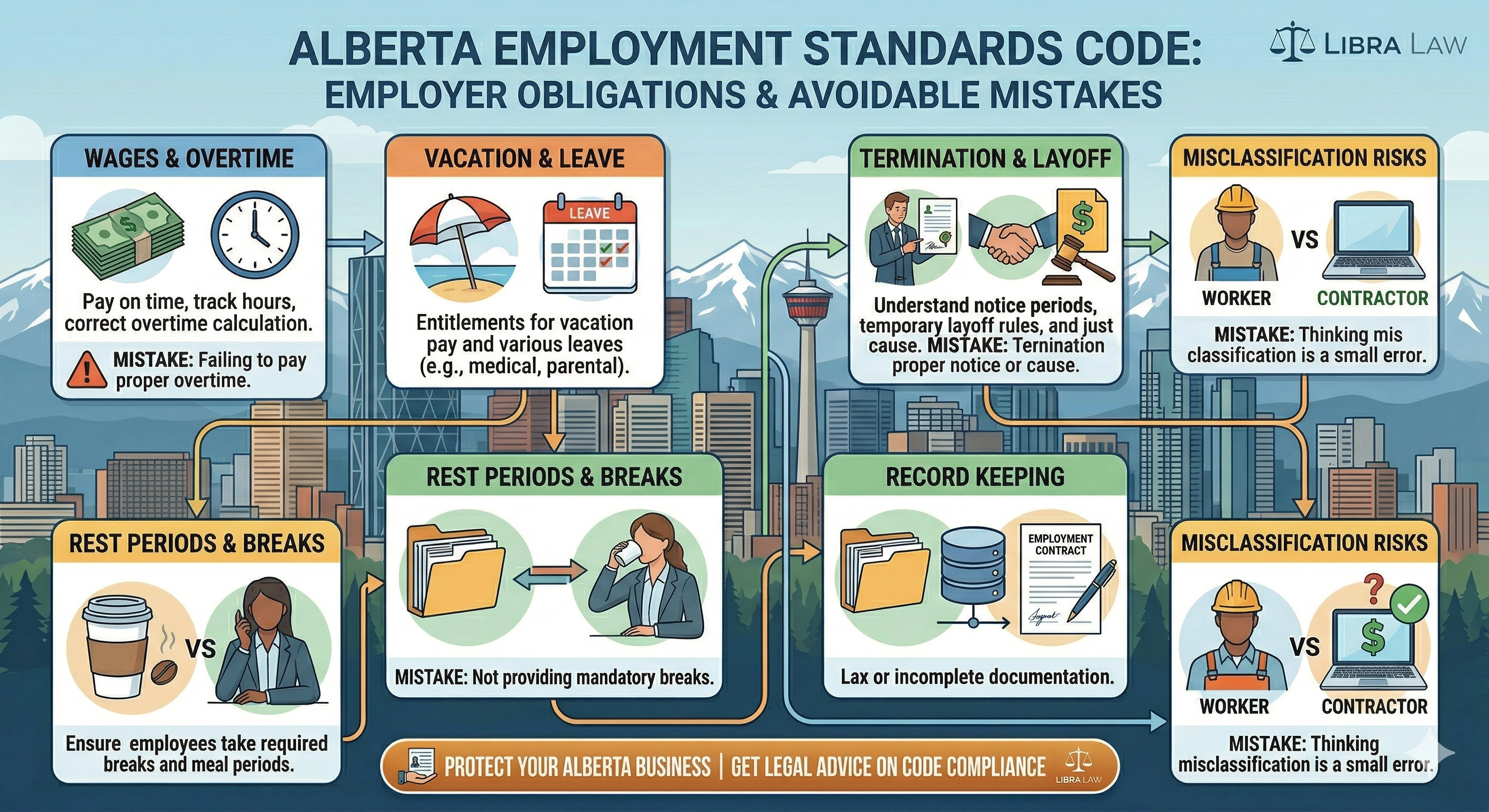
If you are an employer in Alberta, understanding your obligations under the Alberta Employment Standards Code is essential. Many business owners assume that if they are paying employees and running payroll, they are already doing everything required. In reality, employment standards compliance involves much more than that.
The Alberta Employment Standards Code sets the province’s minimum standards in areas such as wages, hours of work, overtime, vacation and holiday pay, leaves, and termination of employment. These are the baseline rules many employers must follow. The Employment Standards Regulation adds more detail, including rules on minimum wage, young workers, and certain industry-specific requirements.
For Alberta employers, small compliance mistakes can quickly become expensive. Problems often begin with outdated contracts, poor recordkeeping, worker misclassification, or misunderstandings about termination obligations. If you want to protect your business, reduce disputes, and stay compliant, it helps to understand where employers most often go wrong.
What is the Alberta Employment Standards Code?
The Alberta Employment Standards Code is the legislation that sets minimum workplace standards for many employers and employees in Alberta. It covers major employment issues such as:
- payment of wages
- hours of work
- overtime
- vacation and general holidays
- job-protected leaves
- termination of employment
The Alberta government’s employer toolkit explains that the Code outlines the core standards and basic employer responsibilities, while related regulations provide additional detail on how the rules work in practice.
It is important to remember that these are minimum standards. Employers should not assume that minimum standards are the full extent of their legal risk. Employment contracts, workplace policies, and how a business handles discipline or termination may also affect liability.
If you are reviewing your overall risk exposure, you may also want to read protecting your business from costly employment mistakes in Alberta.
Why Alberta employers need to understand employment standards
Many employment disputes do not begin with intentional wrongdoing. They begin with incorrect assumptions.
For example, an employer may believe:
- an employee is not entitled to overtime because they are salaried
- a vacation calculation method is “close enough”
- a contractor can simply be treated like an employee without consequences
- termination pay only needs to meet the absolute minimum in every case
These assumptions can create problems.
The Alberta government’s employer resources are designed to help employers understand how employment standards rules apply to their businesses, which reflects how often these issues come up in day-to-day operations.
Key employer obligations under the Alberta Employment Standards Code
1. Paying wages properly and on time
One of the most basic employer obligations under Alberta employment standards is paying employees correctly and on time. That includes ensuring wages are calculated properly and that any deductions are lawful.
Wage issues often arise when employers:
- make deductions they should not make
- fail to properly track hours worked
- misunderstand how certain compensation arrangements operate
- rely on informal payroll practices instead of documented systems
Even straightforward wage mistakes can become larger disputes if they affect multiple employees or continue over time.
2. Understanding hours of work and overtime rules
Hours of work and overtime are common problem areas for Alberta employers. Businesses often assume overtime only applies to hourly workers, or that salary automatically removes overtime obligations. That is not always the case.
Employers should understand how work hours are tracked, whether averaging arrangements may apply, and which employees may or may not fall within certain overtime rules. Alberta’s current Employment Standards Code includes provisions dealing with averaging arrangements, and the province continues to provide updated employer guidance and training on these obligations.
When in doubt, employers should review both their scheduling practices and their employment agreements to make sure they are aligned.
If you need stronger contract protection, see employment contracts in Alberta and the clauses that protect employers.
3. Handling vacation pay and general holidays correctly
Vacation pay and general holiday pay are another frequent area of confusion. Alberta continues to publish specific employer guidance on vacation entitlement, vacation pay, and general holiday pay, which is a good indication of how commonly these issues are misunderstood.
Common employer mistakes include:
- using the wrong vacation pay calculation
- failing to update vacation entitlements for longer-service employees
- confusing paid vacation time with vacation pay
- mishandling general holiday eligibility or pay
These issues can seem administrative, but they often become legal problems when employees leave or challenge past payroll practices.
4. Complying with employee leave obligations
The Code also includes job-protected leaves for eligible employees. Alberta’s employer toolkit includes a dedicated module on these leaves, including notice requirements and eligibility rules.
Employers can get into trouble when they:
- deny leave without understanding eligibility
- fail to document leave requests properly
- mishandle job protection obligations
- treat leave-related absences inconsistently
A growing business should make sure managers understand how leave requests are handled and when legal review may be needed.
5. Meeting termination and temporary layoff obligations
Termination is one of the most sensitive and high-risk areas of employment law.
Alberta provides an official Employment Standards tool specifically for termination of employment and temporary layoff, which reflects how important it is for employers to understand their notice and pay obligations.
Common mistakes include:
- assuming short-service employees have minimal exposure
- using a weak or outdated termination clause
- issuing a poorly drafted termination letter
- overlooking bonuses, commissions, or benefits issues
- assuming minimum standards are the only consideration
This is one of the biggest reasons employers should not rely on guesswork when ending employment.
For related reading, see:
- severance pay in Alberta
- severance packages in Alberta
- wrongful dismissal compensation in Alberta
- lawyer review of a termination letter in Alberta
Common mistakes Alberta employers make
Relying on outdated contracts
An employer may have contracts in place, but that does not mean those contracts are doing what the employer thinks they are doing. Old templates, vague language, and poorly drafted termination provisions can create unnecessary risk.
To learn more, read whether post-hire employment contracts are enforceable in Alberta.
Misclassifying employees as contractors
This is one of the most expensive employment mistakes a business can make. A worker’s true legal status depends on more than job title alone.
For a closer look, see employee vs. contractor misclassification in Alberta.
Failing to document policies and workplace decisions
Employment standards compliance is easier to manage when employers have:
- clear written contracts
- signed acknowledgments of policies
- records of hours worked
- documentation of performance concerns
- records of leave requests and approvals
Without documentation, even a business that intended to comply may struggle to defend its actions later.
Treating compliance as a one-time task
Employment law is not something employers should set up once and ignore. As a business grows, its workforce changes, compensation models evolve, and legal risks increase.
That is why employers should periodically review their documents and practices instead of waiting until a dispute appears.
A useful related resource is written contracts for small business in Alberta.
How written employment contracts help employers stay compliant
A properly drafted employment agreement can support compliance under the Alberta Employment Standards Code by clearly setting out:
- compensation structure
- hours and scheduling expectations
- vacation terms
- bonus language
- confidentiality obligations
- termination provisions
- role-specific restrictions where appropriate
Clear contracts do not eliminate every legal issue, but they can reduce ambiguity and help employers manage risk more effectively.
For more on this topic, see:
- written employment contracts in Alberta for business protection
- employment contracts in Alberta and the clauses that protect employers
- non-compete clauses in Alberta
When Alberta employers should get legal advice
An Alberta employer should consider legal advice when:
- hiring employees into important roles
- updating contracts or workplace policies
- dealing with contractor classification questions
- planning a termination or temporary layoff
- buying a business with employees
- hiring foreign workers
- facing repeated payroll, vacation, or overtime questions
Employment law often overlaps with broader business decisions. If your business is growing or changing, this is often the right time for a legal review.
Related resources include:
- buying a business and employment law risks in Alberta
- buying a business that employs foreign workers
- employer-sponsored work permits in Canada
- business law services in Alberta
Final thoughts
The Alberta Employment Standards Code sets the minimum rules many employers must follow, but compliance problems rarely stay “minimum” for long. A wage mistake, overtime issue, leave problem, or poorly handled termination can quickly create a much bigger legal and financial problem for your business.
The good news is that many of the most common employment law mistakes are preventable. With properly drafted contracts, better internal systems, and legal guidance at the right time, Alberta employers can reduce risk and make better decisions before issues escalate.
If your business needs help reviewing contracts, workplace obligations, or termination risks, visit Libra Law’s employment law services or contact Libra Law.
FAQ: Alberta Employment Standards Code for employers
What does the Alberta Employment Standards Code cover?
The Alberta Employment Standards Code covers minimum employment standards in areas such as wages, hours of work, overtime, vacation and holidays, leaves, and termination of employment.
Is the Alberta Employment Standards Code the only law employers need to think about?
No. The Code sets minimum standards, but employers should also think about employment contracts, workplace policies, documentation, termination practices, and other legal risks.
Do salaried employees automatically lose overtime rights in Alberta?
Not necessarily. Employers should not assume that salary alone determines overtime entitlement. The rules depend on the employee’s role, the applicable standards, and how the work arrangement is structured.
Why should Alberta employers review their contracts regularly?
Because outdated or poorly drafted contracts can increase legal risk. As a business grows or changes, contracts and policies should be reviewed to make sure they still reflect the employer’s needs and current legal requirements.
This article is for general informational purposes only and does not constitute legal advice. For advice specific to your situation, consult a qualified professional.
